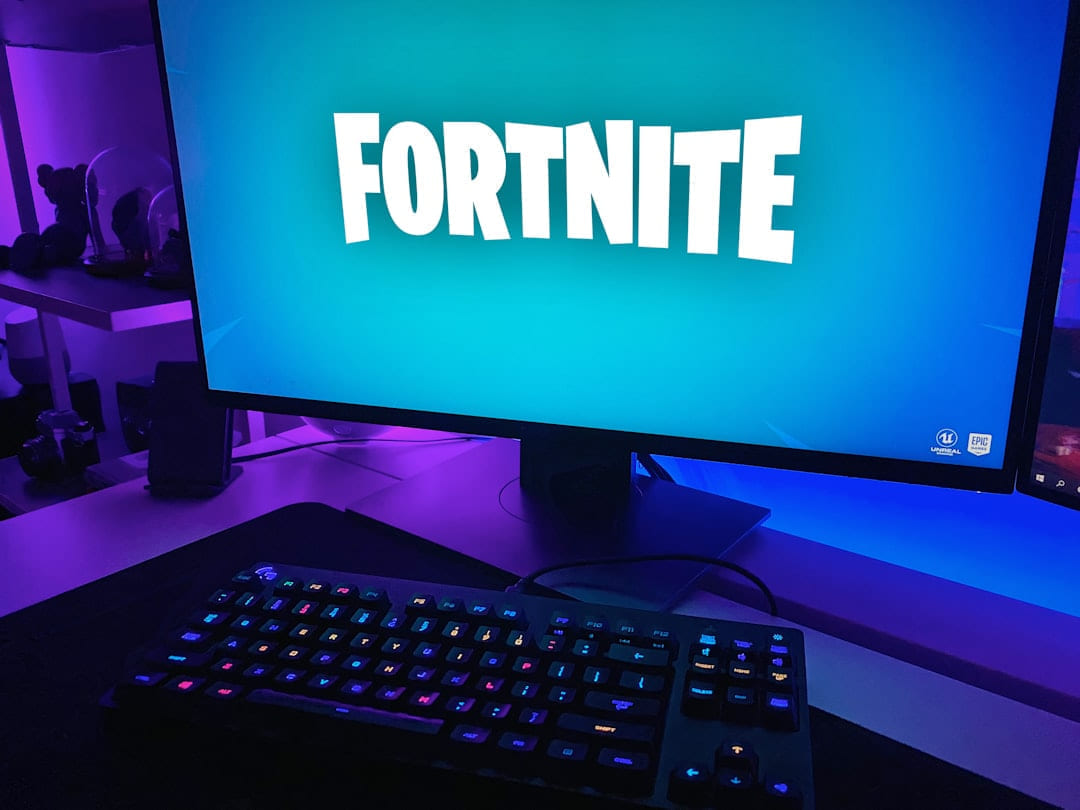
For Monitor Frame Rate Quirks, the practical goal is to connect the idea to choices that fit your time, budget, and comfort level.
Frame Rate can be easier to approach when you start with a few practical basics.
|--------------------|---------------|-----------------|----------------|-----------------| | Response Time | 0.03ms | 4ms - 6ms | 1ms - 4ms | ~1ms (potential)| | Black Levels | Excellent | Very Good | Good | Exceptional | | Color Gamut | Excellent | Very Good | Good | Exceptional | | Input Lag | Excellent | Very Good | Good | Excellent |Refresh Rate Hierarchy & Practical Implications
Let's talk about speed. 240Hz and 360Hz monitors are now commonplace, and the question isn’t if you should get one, but when it really matters. Honestly, for most single-player games - think sprawling RPGs, immersive story-driven adventures - the difference between 60Hz and 144Hz is often subtle. The real gains come in competitive titles like Apex Legends, Counter-Strike, or Forza. At these refresh rates, the reduced input lag and smoother motion blur can give you a tangible edge. but don’t fall into the trap of thinking that a higher refresh rate always equals better performance. There’s a diminishing return. Going from 144Hz to 240Hz might provide a noticeable improvement, but the jump from 144Hz to 360Hz is often less dramatic. And crucially, your game needs to support the higher refresh rate. If the game isn’t pushing frames at that speed, you’re just seeing a blank screen. Variable Refresh Rate (VRR) - G-Sync and FreeSync - are essential to making these high refresh rates work smoothly. VRR dynamically adjusts the monitor’s refresh rate to match the frame rate output by your GPU, eliminating screen tearing and stuttering. G-Sync (Nvidia) and FreeSync (AMD) have evolved significantly. G-Sync Ultimate offers the lowest latency and the widest refresh rate range, while FreeSync Premium Pro provides similar benefits but with broader compatibility across monitors.
Adaptive Sync - G-Sync Ultimate & FreeSync Premium Pro (2026)
In 2026, the battle between Nvidia’s G-Sync and AMD’s FreeSync continues, but both technologies have matured considerably. G-Sync Ultimate is now the top-tier option, offering the lowest possible input lag and the widest range of supported refresh rates - up to a staggering 540Hz in some models. FreeSync Premium Pro has caught up significantly, providing similar performance with broader monitor compatibility. The key difference now lies in how these systems reduce latency. Both G-Sync Ultimate and FreeSync Premium Pro use technologies like "Variable Overdrive" and “Null Check” to minimize input lag. Variable Overdrive adjusts the response time dynamically, while Null Check eliminates the need for a dedicated sync target, resulting in a more seamless experience. GPU and monitor compatibility remains a potential hurdle. Older GPUs may not support G-Sync, and some monitors might require firmware updates to fully use FreeSync Premium Pro. Let’s look at a real-world example: In Doom Eternal, I noticed a significant reduction in screen tearing and stuttering when using G-Sync Ultimate compared to disabling it. The game felt noticeably smoother, and the responsiveness was improved - giving me a slight advantage in fast-paced combat.
Step-by-Step Frame Rate Optimization
Okay, you’ve got a high-end monitor and a powerful PC. Now let’s make sure you’re actually seeing the benefits. 1. Monitor Settings: Start with overdrive. Too much overdrive can introduce ghosting, so find a balance. Lower your response time settings - don’t go overboard. Input lag is your enemy here; aim for the lowest possible value. 2. GPU Settings: Disable V-Sync unless absolutely necessary. Adaptive resolution is a better option than V-Sync for maintaining a consistent frame rate. 3. In-Game Settings: This is where you’ll find the biggest gains. Lowering graphical settings - textures, shadows, anti-aliasing - can dramatically increase frame rates without sacrificing too much visual fidelity.
Pick the easiest win first
Most people get better results with Monitor Frame Rate Quirks when they narrow the decision to one real problem. That could be saving time, trimming cost, reducing friction, or making the routine easier to keep up.
This usually gets easier once you make a short list of priorities. A tighter list tends to produce better decisions than trying to solve every possible problem at once.
Another useful filter is asking what you would still recommend if the budget got tighter, the schedule got busier, or the setup had to be easier for someone else to manage. The answers to that question usually reveal which advice is durable and which advice only works under ideal conditions.
The tradeoff most people notice late
One common mistake with Monitor Frame Rate Quirks is expecting every option to solve the whole problem. In reality, some choices are better for convenience, some for reliability, and some simply for keeping the budget under control.
Before spending more, it is worth checking the setup, upkeep, and learning curve. Small hassles matter here because they are usually what decide whether something stays useful or gets ignored.
It is easy to underestimate how much clarity comes from removing one unnecessary layer. In practice, trimming one complication often does more for Monitor Frame Rate Quirks than adding one more feature, one more product, or one more clever workaround.
What makes this easier to live with
The options that age well are usually the ones that are easy to repeat. Reliability and low hassle often matter more than the most impressive-looking feature list.
In a topic like PC hardware and gaming gear, manageable almost always beats impressive. If something is simple enough to keep using, it is usually doing more real work for you.
Readers usually get better results when they treat advice as something to test and refine, not something to obey perfectly. That mindset creates room for real judgment, which is often the difference between content that sounds smart and guidance that is actually useful.
How to avoid extra hassle
When you are deciding what to do next, aim for the option that reduces friction and gives you a clearer read on what matters most. That is usually how Monitor Frame Rate Quirks becomes more useful instead of more complicated.
Leave a little room to adjust as you go. A setup that works in one budget range, season, or routine might need a small change later, and that is usually normal rather than a sign you got it wrong.
If this topic still feels crowded or overcomplicated, that is usually a sign to narrow the decision, not a sign that you need more noise. One careful adjustment, followed by honest observation, tends to teach more than another round of abstract tips.
Keep This Practical
A better setup usually comes from one smart hardware decision at a time. Match the upgrade to your games, monitor, and budget instead of chasing every enthusiast talking point.
Tools Worth A Look
The products here work best for readers who want performance, comfort, or setup improvements with a clear gaming payoff.
- Wireless Keyboard and Mouse Combo - 9 Backlit Effects, RGB, Ergo Wrist Rest, Phone Holder, 2.4G Full Size, RechargeableEZDIY-FAB Shield 24-pin 90 Degree Angle Adapter with Infinity Mirror ARGB Light,ATX 24 Pin Power ConnectorLogitech G RS H-SHIFTER - Sim Racing Gear ShifterHORI Wireless Racing Wheel Apex for Playstation 5, PlayStation 4 and Windows 11/10Redragon M908 Impact RGB LED MMO Gaming Mouse with 12 Side Buttons, Optical Wired Ergonomic Mouse with Max 12,400DPI, High Precision
Some of the links on this page are Amazon affiliate links, which means I may earn a small commission if you make a purchase through them. As an Amazon Associate, I earn from qualifying purchases.
Related ReadingMore from Frame Rate Vault
Monitor Tech: Leveling Up Your Frame Rate
Let's talk about speed. 240Hz and 360Hz monitors are now commonplace, and the question isn’t if you should get one, but when it really matters. Honestly, for most.

Monitor Tech: Avoiding Common Gaming Mistakes
You’re staring at a screen, the game looks gorgeous, the frame rate is…okay. But you’re getting ghosting, shimmering, or just a general feeling that something’s.

Monitor Tech: Decoding Frame Rates
The options that age well are usually the ones that are easy to repeat. Reliability and low hassle often matter more than the most impressive-looking feature list.